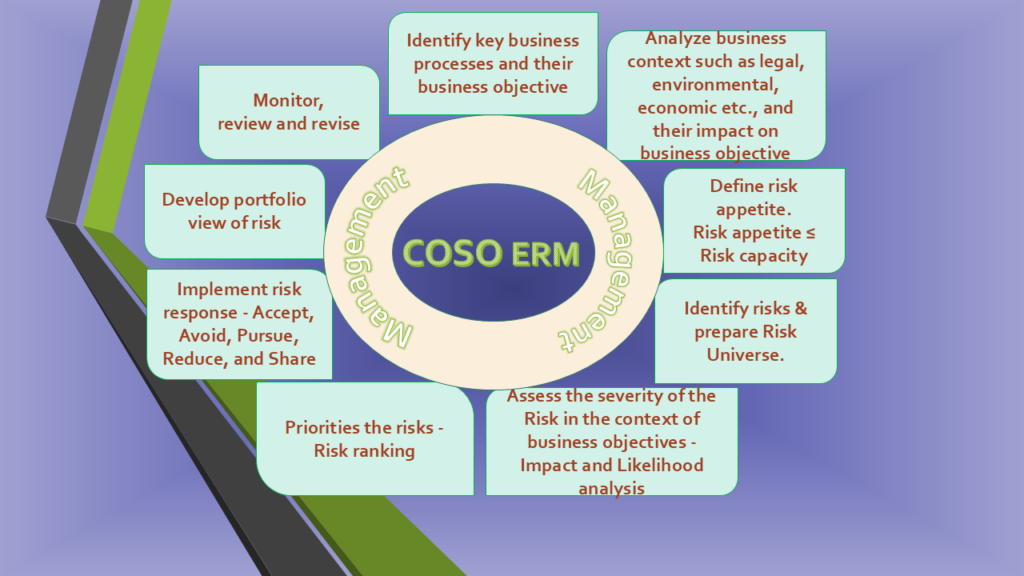
1. Identify key business processes and objectives
- Define core activities that drive organizational value.
- Align processes with strategic and operational goals.
- Ensure clarity in purpose and expected outcomes.
- Break down functions into measurable components.
- Link each process to specific business objectives.
- Establish accountability for performance delivery.
2. Analyze business context
- Evaluate external and internal factors affecting operations.
- Consider regulatory, social, and market conditions.
- Understand their influence on business objectives.
- Identify constraints and opportunities in the environment.
- Assess how changes impact risk exposure.
- Align strategy with evolving external conditions.
3. Define risk appetite (≤ risk capacity)
- Determine acceptable levels of risk for the organization.
- Ensure appetite does not exceed capacity to absorb losses.
- Align risk tolerance with strategic priorities.
- Communicate risk limits across all management levels.
- Balance growth ambitions with risk-taking ability.
- Establish boundaries for decision-making.
4. Identify risks & prepare Risk Universe
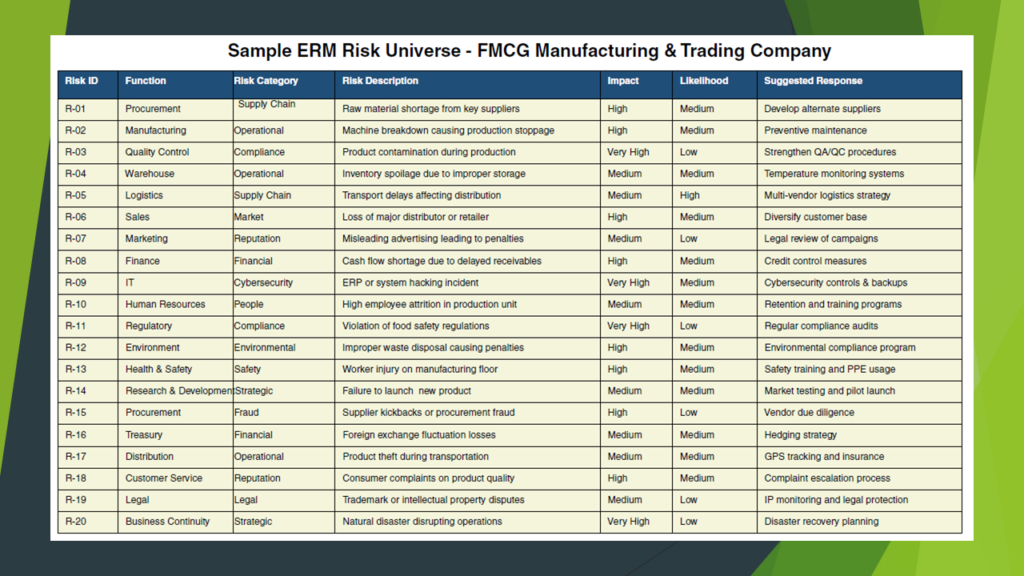
- Recognize potential events that may affect objectives.
- Document risks across all functions and processes.
- Create a comprehensive risk inventory.
- Categorize risks (strategic, operational, financial, etc.).
- Include both internal and external risk sources.
- Build a structured “Risk Universe” database.
5. Assess severity (Impact & Likelihood analysis)
- Evaluate potential impact of each identified risk.
- Estimate likelihood of occurrence.
- Combine both to determine risk severity.
- Use qualitative and quantitative assessment methods.
- Apply scoring models for consistency.
- Focus on risks that threaten achievement of key objectives.
6. Prioritize risks (Risk ranking)
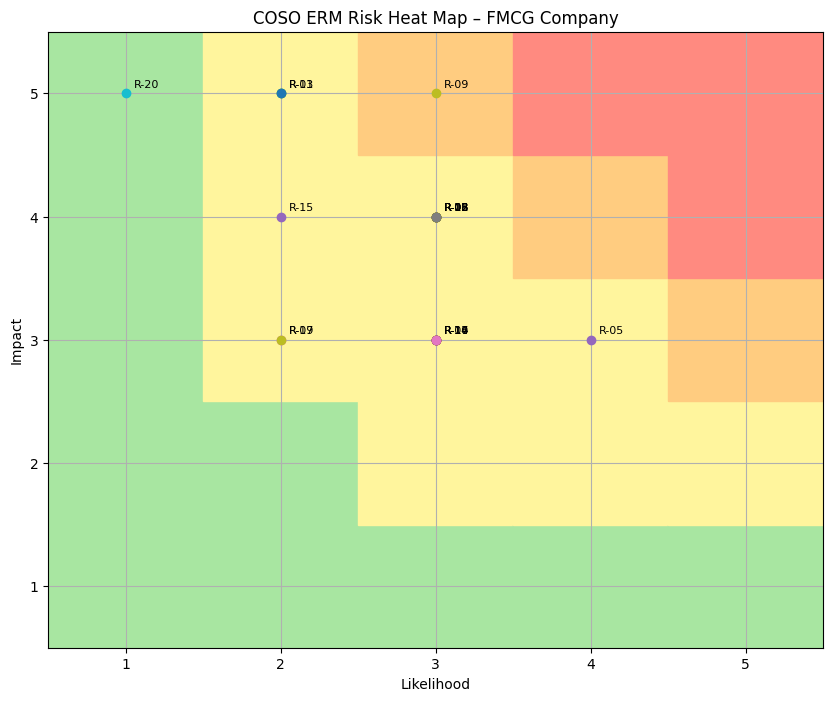
- Rank risks based on severity and business impact.
- Identify high-priority risks requiring immediate attention.
- Allocate resources accordingly.
- Use heat maps or ranking matrices.
- Distinguish critical vs. manageable risks.
- Support decision-making with clear prioritization.
7. Implement risk response (Accept, Avoid, Pursue, Reduce, Share)
- Select appropriate response strategies for each risk.
- Mitigate or transfer risks where possible.
- Accept risks within tolerance levels.
- Implement controls and action plans.
- Assign ownership for each response.
- Monitor effectiveness of mitigation strategies.
8. Develop portfolio view & Monitor, review, revise
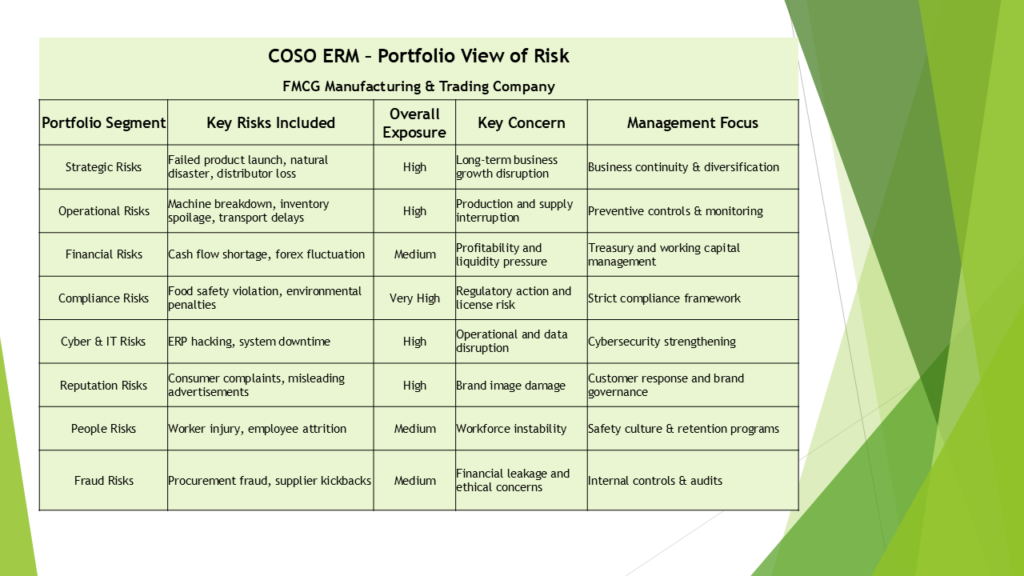
- Consolidate risks into an enterprise-wide view.
- Understand interdependencies across risks.
- Support strategic oversight and governance.
- Continuously monitor risk environment and controls.
- Review performance and update risk strategies.
- Revise processes to adapt to changes.